


Keeping Up With Compliance: Legal & Background Screening Developments in Early 2026
5 min read
Published
Apr 16, 2026

Employment background screening and compliance continue to evolve at a rapid pace, and the start of this year was no exception.
In our most recent Keeping Up With Compliance webinar, Kelly Ubel, Asurint’s former General Counsel, and Vince Pascarella, Asurint’s newly appointed General Counsel, broke down some of the most impactful recent legislative and litigation developments employers should be tracking.
Below recaps a high-level look at three major themes from the webinar. To truly understand how these changes may affect your hiring and screening program, we highly recommend watching the full webinar recording.
1. State-Level Fair Chance & Background Screening Laws Are Becoming More Complex
One of the most prominent themes from the webinar was the continued expansion, and complication, of state and local fair chance laws. Kelly kicked off the legislative update by highlighting how states are refining their approaches to criminal history screening, often placing new operational burdens on employers:
- Proposed changes in California could significantly alter how and when employers are allowed to request criminal background checks. While still in draft form, the bill would require employers to provide a list of specific job duties for the position where a conviction may result in adverse action before requesting consent for a background check. For organizations hiring hundreds of roles at scale, this could introduce big administrative challenges.
- Ohio’s proposed ban-the-box legislation demonstrates another emerging trend: balancing second-chance advocacy with employer protections. As discussed in the webinar, recent amendments removed certain assessment requirements while adding explicit liability protections for employers, a notable shift from similar laws in other states.
To better understand what these proposed changes could mean for your screening workflows, view the on-demand recording.
2. Disclosure Forms: When More Information Creates More Consequences
Disclosure and authorization requirements remain one of the most critical and detail‑driven areas of background screening compliance. During the webinar, Kelly highlighted how state‑specific laws, particularly in California, impose standards that go beyond federal requirements and demand close attention to form content and presentation.
Using California’s Investigative Consumer Reporting Agencies Act (ICRA) as an example, Kelly and Vince discussed a recent appellate court decision that examined whether a disclosure was truly “clear and conspicuous.” In the Parsonage v. Walmart case, the plaintiff received a 14-page disclosure form that also listed six consumer reporting agencies (CRAs) or background screening providers and directed applicants to contact them to determine which agency would run the background check. While the plaintiff received the report and the job, the court still scrutinized whether the disclosure met California’s strict clarity standards.
The key takeaway for employers is that more information isn’t always better. Overly complex disclosures, multiple listed providers, or missing state‑specific elements can weaken compliance, even when the employer’s intent is transparency.
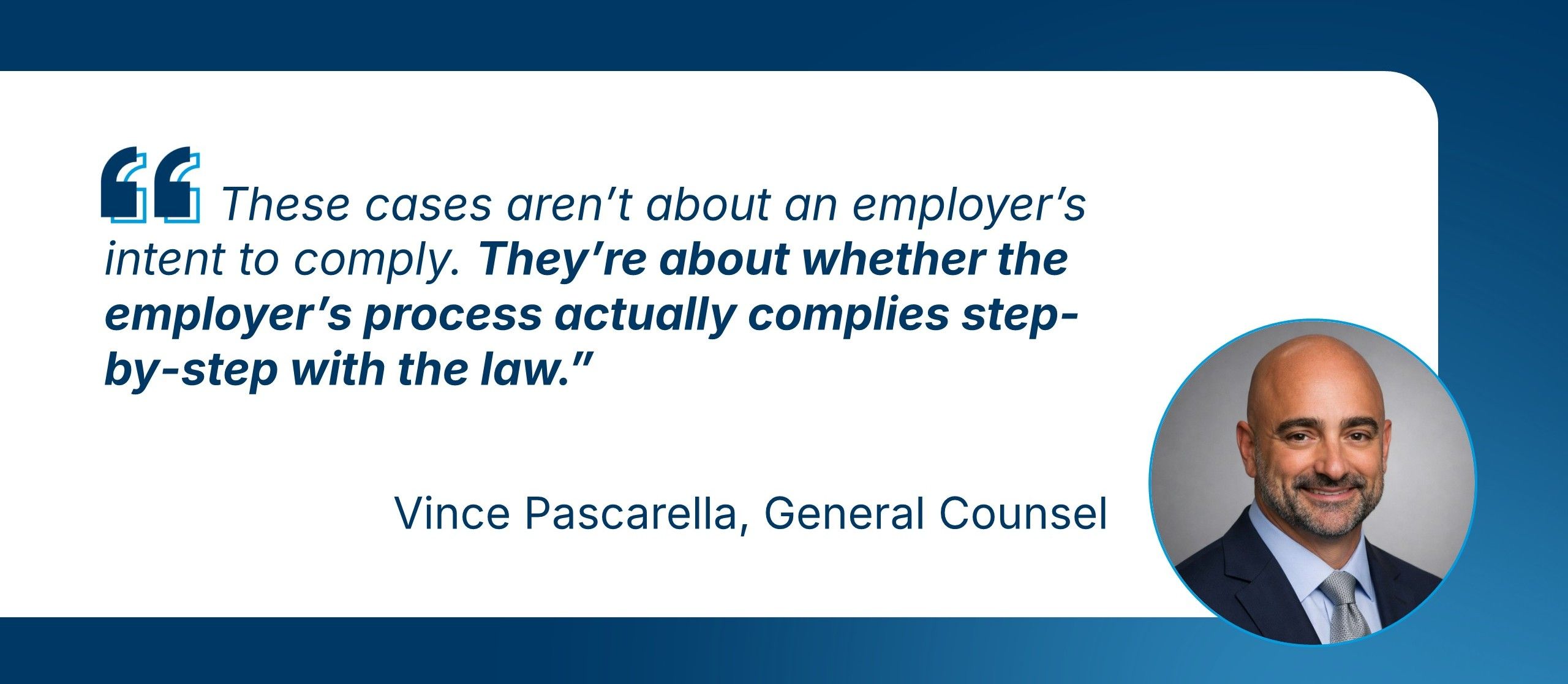
For employers hiring in states like California, this serves as a reminder to regularly review disclosure and authorization forms to ensure they are streamlined, accurate, and aligned with state‑level requirements, before a background check is ever ordered.
The on-demand webinar recording dives deeper into what these cases mean, and how to pressure-test your processes.
3. Criminal History Use Still Carries Discrimination Risk
Even as federal enforcement priorities shift, employers continue to face real exposure related to how criminal history is used in employment decisions. During the webinar, Kelly emphasized that discrimination claims tied to background check policies are still very much alive at the state and local level.
She pointed to a recent case filed in the District of Columbia where an employer’s policy was challenged as overly broad and unduly harsh. In that case, a long‑tenured employee with no performance or safety issues was terminated after an annual monitoring screen surfaced a misdemeanor conviction that was more than 20 years old. The complaint argued that the policy failed to consider the age of the record, job performance, or job‑relatedness.
The lawsuit also alleged that the employer’s zero‑tolerance policy had a disproportionate impact on Black workers, citing local conviction data to support a disparate impact claim. According to the complaint, a facially neutral policy that does not allow for individualized assessment may still be impermissibly discriminatory.
The takeaway for employers: it’s worthwhile to review your adjudication criteria and evaluate if there are any potentially problematic policies in place.
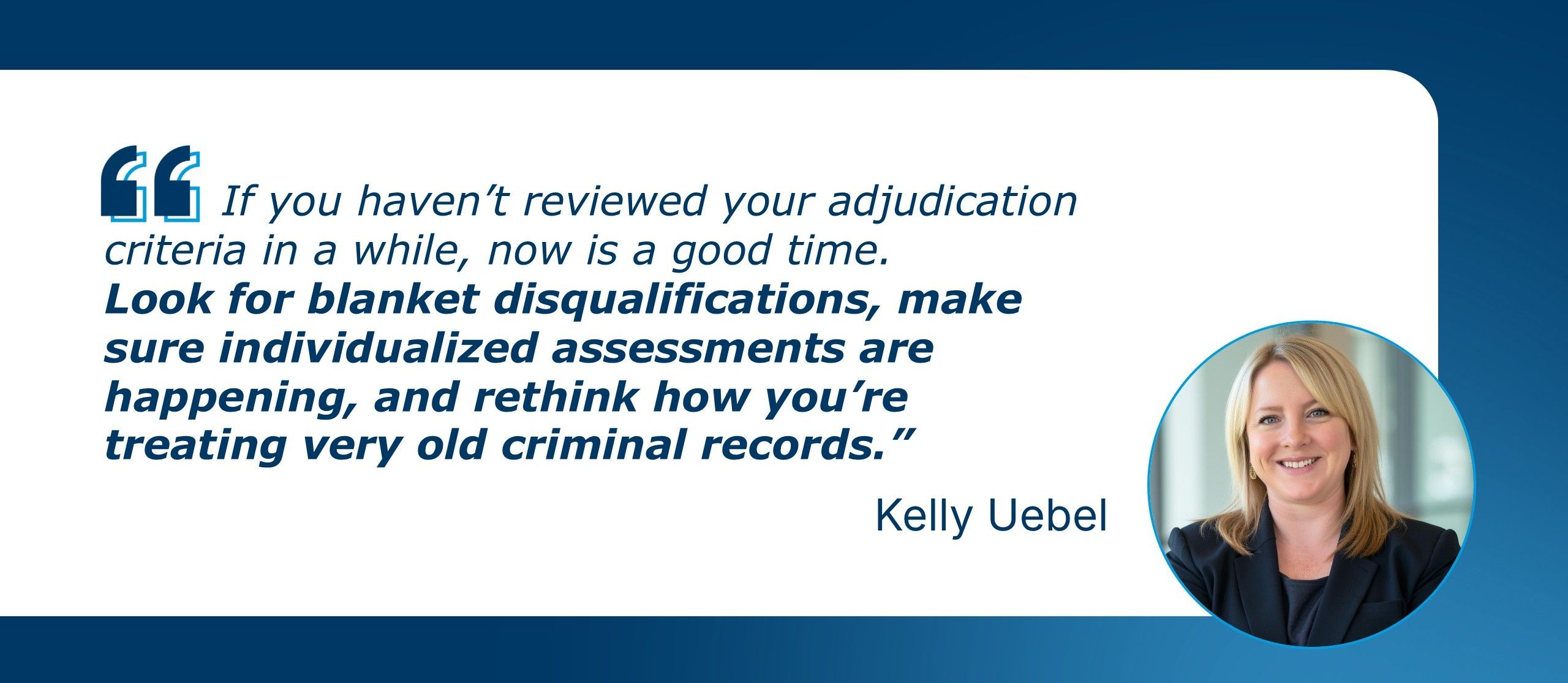
Vince reinforced this point by stressing the importance of consistency and training, especially for hiring managers who may communicate adverse decisions informally or prematurely.
To hear more real-world examples and actionable insights, take a look at the on‑demand webinar.
Stay Ahead of Compliance Changes
From fair chance laws and clean slate legislation to disclosure and adverse action litigation, the start of 2026 reinforced one thing: background screening compliance is getting more nuanced.
This recap only scratches the surface. Kelly and Vince provide deeper context, practical examples, and expert insights throughout the full webinar session that are invaluable for HR, legal, and compliance professionals alike.

Disclaimer: This content is provided for informational and educational purposes only and is not intended to constitute legal advice. It reflects general industry insights and best practices to support discussion and awareness. Organizations should consult with their legal, compliance, or other professional advisors before making changes to their background screening programs to ensure compliance with applicable laws and regulations.
You might also like

5 Golden Rules for Property Operators
The following five principles reflect what effective, modern tenant screening looks like today and how property teams can protect their assets while meeting evolving expectations.

3 Drug Screening Assumptions Employers Need to Revisit
During our recent webinar, "Can You Spot the Lie? The Employer's Drug Testing Reality Check," three themes stood out as particularly important for employers evaluating or updating their drug testing programs.

Social Media Screening: Here's What Employers Need to Know
Social media screening is gaining traction in hiring, but understanding the facts behind the process is key to making informed, compliant decisions.