


The Hidden Crisis in Public Records: How Data Gaps Are Putting Property Managers at Risk
8 min read
Published
May 19, 2026

Why disappearing court identifiers, fragmented access, and “fast but thin” reports are creating compliance risk and how modern tenant screening solves it.
If tenant screening has felt more complicated over the past two years, there’s a reason. Courts nationwide are limiting public access to key identifiers that are used to match records accurately, primarily in response to growing privacy concerns, rising identity theft risks, and pressure to protect personally identifiable information (PII).
At the same time, expectations around tenant screening accuracy and transparency remain firmly in place under the federal Fair Credit Reporting Act (FCRA) and Fair Housing Act (FHA), as well as at the state and local level.
The result: higher likelihood of misattributed records, unreported records, incomplete reports, and greater regulatory exposure for property teams.
In a recent interview with Real Estate Business Outlook, Nathan Eads, Asurint Chief Operating Officer, explained the shift: “Quality screening matters. Property Managers are given a false choice between you’ll get whatever we have, or it will take so long and cost so much that you can’t afford to use it. ” The promise, he adds, is that “quality screening matters—and it’s available.”
This blog unpacks what’s driving the current crisis in public records, what it means for property teams, and what steps you can take to better protect your portfolio.

The New Reality: Less Public Data, More Compliance Pressure
Court Identifiers Are Disappearing
High volume jurisdictions are removing identifiers that screeners historically used to confirm a record belongs to the right person. In Los Angeles County, the Superior Court announced that as of February 23, 2024, public criminal name searches no longer include birth month and year, both online and at courthouse kiosks, with a five file per location cap for in person file pulls reflected in court FAQs. These changes increase the difficulty of making accurate matches across the board, not just for common names.
In South Carolina, the Judicial Branch’s public index now omits home addresses for new and existing cases (effective January 1, 2026), which removes another anchor field researchers use to distinguish between people with the same or similar names. Even when a record exists, the lack of identifiers complicates confident matching without obtaining additional identifiers or performing additional identifier verification.
Nathan sees this play out every day: “Property Managers are finding data is vanishing and it’s either the records are not available or it’s missing all the key elements because there’s more than one John Smith in the United States.” He points to states making well intended privacy changes that nonetheless create “a very inconsistent view” for national portfolios.
Federal Agencies Expect More Accuracy and Transparency
The Consumer Financial Protection Bureau (CFPB) and the Federal Trade Commission (FTC) have underscored that background reports must be complete and accurate, exclude sealed/expunged records, avoid duplicative records more concisely, and include up-to-date disposition information. They also emphasize consumers’ rights to obtain and dispute their reports and files, and landlords’ duties around disclosures, authorizations, notices and adverse action.
Fair Housing Scrutiny is Intensifying
HUD’s Fair Housing and Equal Opportunity guidance warns against tenant screening practices that may create discriminatory outcomes, including:
- Black-box scoring algorithms
- Overly broad criminal history policies
- Opaque denial criteria
A March 2024 multi-agency resource further highlights renters’ rights and agencies’ expectations around tenant screenings and reinforces that property managers, not vendors, remain responsible for nondiscriminatory screening.
Nathan connects the dots: “Most of those laws are very localized and put the burden on every single leasing agent to become an expert in a nation full of city and state laws—that is almost impossible.”

Where “Fast and Cheap” Breaks Down
In this environment, “instant” or database-only checks can create four traps:
- Name Only Matches: As courts redact date of births (DOBs) and addresses, “name only” association is exactly what agencies caution against. In tenant screening, the FCRA requires reasonable procedures to ensure maximum possible accuracy, not “close enough” matches.
- Missing Dispositions and Outdated Content: Reports that show filings but omit outcomes like dismissals, acquittals or amended charge levels, or include sealed/expunged cases, mislead decision makers, invite litigation and can draw regulatory scrutiny.
- Noncompliant Consideration of Restricted Records: A multitude of local laws can bar use of certain records (ex. lookback limits, marijuana offense treatment). Expecting Property Managers to track this manually across thousands of jurisdictions is unrealistic.
- Opaque Scoring: When algorithms drive a “decline” score without adequate clarity, you face FHA risk and can’t deliver transparent, compliant, adverse action rationales. HUD has emphasized that AI and automation do not change your FHA obligations and that decisioning processes must remain explainable regardless of the tool used.
What Modern, Compliant Tenant Screening Looks Like
Today’s tenant screening environment demands more than speed alone. With more restricted public data and increasing regulatory scrutiny, property teams need solutions that balance accuracy, coverage, compliance, and transparency.
Here’s what a modern, compliant tenant screening approach looks like in practice:
Go Deeper Than “Database Only”
Modern tenant screening goes beyond instant, database-only checks that can be incomplete or outdated. Asurint’s tenant screening platform layers automation, expansive criminal network searches, and direct court access paths (where available) to broaden coverage and improve match accuracy, delivering:
- Up to 60% increase in search coverage
- 15% more criminal records identified compared to database-only searches
Nathan explains this differentiator: “We have direct line of sight into the provenance and pedigree of the public records we report, so we’re not sacrificing completeness in the interest of speed.”
Fill in the Blanks with Up to Date, Verified Records
When public feeds omit dispositions or redact identifiers, Asurint’s processes emphasize record verification with original sources, preventing false duplication and ensuring dismissals and other final outcomes are included, in line with the legal requirement of “maximum possible accuracy.”
Automate Adjudication and Compliance
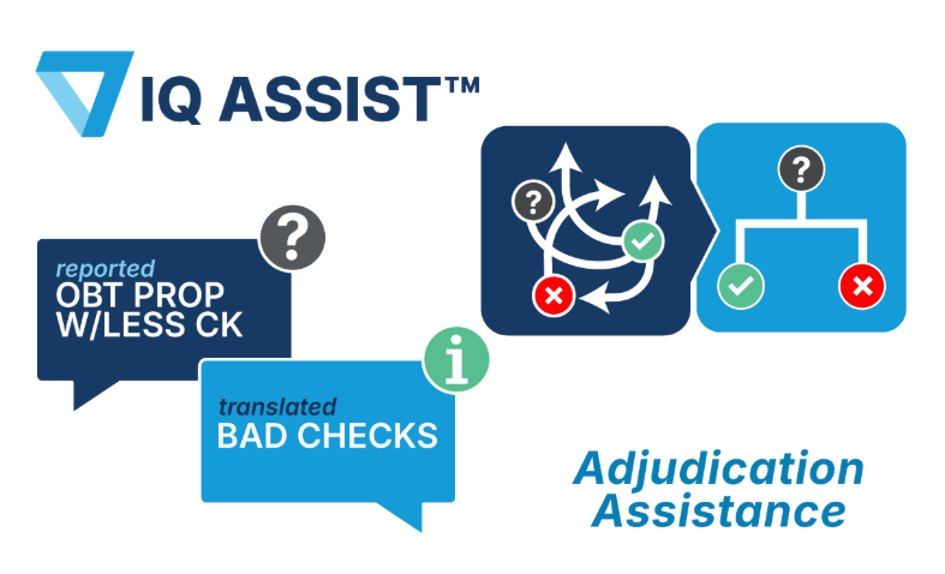
Asurint’s IQ Assist™ adjudication automation helps property teams manage screening decisions more consistently by applying configurable, rules-based logic aligned to their screening criteria and operational policies. Built to support scale and consistency, IQ Assist streamlines decision workflows while reducing subjectivity and manual review burden.
By automating adjudication logic, IQ Assist helps leasing teams apply screening standards more uniformly across jurisdictions, supporting fair and defensible tenant screening decisions as laws and requirements evolve. As Nathan notes, “We have a highly configurable rules‑based engine, so we’re able to keep up with the proliferation of localized requirements by quickly adapting our compliance logic.”
Keep Leasing Workflows Moving
Leasing decisions often need to be same day. Asurint’s platform and integrations are purposely built for high volume environments to keep your leasing motion fast and informed. By reducing manual steps, teams can keep leasing workflows moving, maintain momentum, and make confident decisions while reducing risk.
Be Transparent
Today’s property teams need to see what’s in the box, the data sources included, the jurisdictions covered, and the applicable turnaround time. Nathan summarizes Asurint’s value in one word: “Transparency.” He adds, “Do you know if you’re getting all the records you’re expecting? Are they communicating all the laws that are incorporated into a background screen?”
Action Plan: Reduce Risk While Improving Results
Below are key steps property managers can take right now to strengthen their tenant screening process and reduce risk across their portfolio.
- Consider reviewing vendor coverage and jurisdiction-level workflows to stay aware of how local data changes may affect reports.
- Evaluate whether disposition-level completeness isprovided , as this may assist with clearer and more defensible decision making.
- Explore tools or partners that automatically track local compliance nuances, helping reduce the manual burden on onsite teams.
- Review adverse-action communication workflows to help ensure compliance and consistency.
- Consider working with partners who balance depth and speed, supporting strong leasing outcomes while maintaining accuracy.
For a deeper look at how screening shortcuts can translate into long‑term risk, explore The Cost of Cutting Corners: 6 Reasons Why Quality Tenant Screening Matters blog.

The Takeaway
Public records aren’t what they used to be. With key identifiers disappearing and federal expectations tightening around accuracy, completeness, and transparency, the old playbook of “instant checks” and one size fits all packages no longer works. The screening environment now demands solutions that verify what others assume, adapt quickly to jurisdiction level changes, and restore clarity to a process increasingly shaped by shrinking data and heightened compliance pressure.
The good news: property teams don’t have to choose between speed and certainty. With the right partner, tenant screening can remain fast, fair, and defensible. That’s exactly where Asurint’s tenant screening fits in, helping bridge the widening public records gap so leasing teams can continue making confident decisions, even as the landscape evolves.
As Nathan relayed, “quality screening matters” and thanks to advances in data automation, verification workflows, and configurable compliance tools, it’s available to property teams right now.
You can read Nathan’s full article on the Real Estate Business Outlook here.
Learn more about Asurint’s tenant screening services.
Disclaimer: This content is provided for informational and educational purposes only and is not intended to constitute legal advice. It reflects general industry insights and best practices to support discussion and awareness. Organizations should consult with their legal, compliance, or other professional advisors before making changes to their background screening programs to ensure compliance with applicable laws and regulations.
You might also like

5 Golden Rules for Property Operators
The following five principles reflect what effective, modern tenant screening looks like today and how property teams can protect their assets while meeting evolving expectations.

3 Drug Screening Assumptions Employers Need to Revisit
During our recent webinar, "Can You Spot the Lie? The Employer's Drug Testing Reality Check," three themes stood out as particularly important for employers evaluating or updating their drug testing programs.

Social Media Screening: Here's What Employers Need to Know
Social media screening is gaining traction in hiring, but understanding the facts behind the process is key to making informed, compliant decisions.