


Why Healthcare Background Screening Needs to Change: A Conversation with Verisys and Asurint
5 min read
Published
Jul 13, 2026
Healthcare organizations don’t need another reminder of how complex things have become. They’re living it every day. The real question is how to keep pace, especially when it comes to something as critical as background screening.
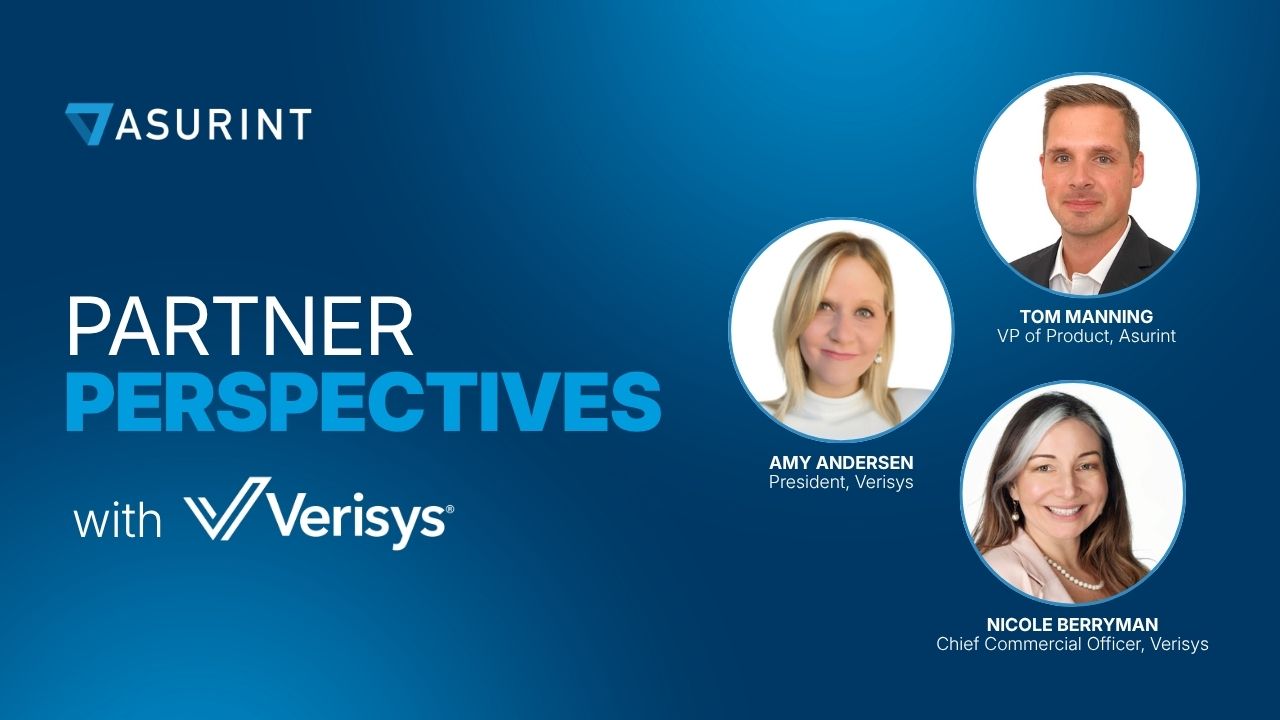
In a recent Partner Perspectives conversation between leaders from Asurint, a technology‑driven background screening provider, and Verisys, a leader in healthcare compliance and credentialing, Tom Manning, Amy Andersen, and Nicole Berryman walked through what’s actually working, what’s being missed, and where traditional approaches are starting to fall short. They also share how they’ve come together to solve these challenges through their new end-to-end solution, the Comprehensive Provider Profile (CPP).

When Healthcare Access Expands, So Do the Risks
Telehealth has made it easier for providers to work across multiple states. That’s a great thing for access, but it also means healthcare organizations need to think beyond conducting local background checks.
At the same time, patients are making faster decisions about care. As Amy Andersen, CEO of Verisys, pointed out, people often spend more time researching a new refrigerator than they do choosing a provider.
“There’s just an assumption that healthcare providers are safe and qualified,” she said. That assumption makes it even more important for healthcare organizations to catch risks early.
Why Identity Fraud is Getting Harder to Detect
One of the biggest concerns right now is identity fraud, and it’s more common than many people realize. Tom Manning, VP of Product at Asurint, explained that a lot of today’s screening processes are still focused on a single state. That might sound reasonable at first, but it creates an easy opening for bad actors.
“If I’m a healthcare professional, if I just keep moving every couple of years, what I did in the past won’t be made available,” he said.
This idea, often called “state hopping,” allows someone to leave behind a trail of issues in one place and start fresh somewhere else. And with more providers working across multiple states, that risk only grows.
But this isn’t a new problem. Instead, it’s become easier to take advantage of. As technology has made healthcare more accessible and more connected, it has also created more openings for the wrong people to slip through.
“As technology grows, so does fraud and so does the opportunity for fraud,” says Amy.
Monitor, Monitor, Monitor: Moving Beyond One-Time Background Checks
Traditionally, healthcare organizations might run a background check once a year or re-check credentials every few years. But a lot can happen in between.
Tom pointed out the problem clearly: if someone knows when checks happen, they can take advantage of the gaps in between. “It gives them a very clear window,” he said.
That’s why all three leaders emphasized the need for ongoing monitoring and keeping track of changes as they happen, instead of waiting months or years.
Nicole Berryman, Chief Commercial Officer at Verisys, added that different types of information show up at different times. A licensing board might flag an issue long before it appears in court records. Without looking at multiple sources, organizations can miss important signals.
Where Background Screening, Credentialing, and Monitoring Finally Connect
To tackle these challenges, Asurint and Verisys came together to rethink what background screening can look like for healthcare providers. The result is the Comprehensive Provider Profile (CPP), a first-of-its-kind solution that brings together enrollment, background screening, licensure, credentialing, and continuous monitoring into one connected, holistic view.
The idea isn’t just to collect more data, but instead to make that data more useful.
For example, if there’s a change in someone’s license, that might trigger a closer look at their background. If someone moves or changes their name, the system adjusts with them.
Tom pointed out that connecting these pieces helps organizations focus on what matters most. “When we see certain signals,” he explained, “there’s a much higher likelihood something else is going on.”
This isn’t just a new idea either. It’s already being proven at scale. Through our partnership with Sparksoft, the CPP is also actively supporting the Centers for Medicare & Medicaid Services (CMS), helping protect one of the largest healthcare programs in the country by identifying risk earlier and reducing fraud, waste, and abuse. And now the same approach that works at the federal level is now being applied more broadly to help healthcare organizations strengthen their own processes.
What This Means for Healthcare Going Forward
Healthcare organizations want to do the right thing. But they’re operating in a much more complicated environment than even a few years ago. Teams are balancing ongoing staffing shortages, growing patient demand, and new ways of delivering care, all while trying to maintain high standards for safety and compliance. At the same time, the risks they’re trying to manage are becoming more sophisticated and harder to spot.
That’s what makes this moment different. The traditional ways of screening and monitoring simply weren’t built for this level of complexity.
Keeping up requires a shift in how the industry thinks about background screening altogether. Instead of relying on isolated checks or point-in-time reviews, healthcare organizations need a more connected and ongoing approach.
That means:
- Looking beyond a single state to understand a healthcare provider’s full history
- Bringing together different types of data so nothing important is missed
- Monitoring continuously, rather than checking in once or twice a year
- Building a more complete, real-time picture of every healthcare provider
Disclaimer: This content is provided for informational and educational purposes only and is not intended to constitute legal advice. It reflects general industry insights and best practices to support discussion and awareness. Organizations should consult with their legal, compliance, or other professional advisors before making changes to their background screening programs to ensure compliance with applicable laws and regulations.
You might also like

Keeping Up with Compliance: Recent FCRA Litigation Trends Employers Need to Watch
We cover recent FCRA cases shaping the employment background screening landscape and highlight emerging legal trends employers should have on their radar.

5 Golden Rules for Property Operators
The following five principles reflect what effective, modern tenant screening looks like today and how property teams can protect their assets while meeting evolving expectations.

3 Drug Screening Assumptions Employers Need to Revisit
During our recent webinar, "Can You Spot the Lie? The Employer's Drug Testing Reality Check," three themes stood out as particularly important for employers evaluating or updating their drug testing programs.