


Keeping Up with Compliance: 3 Key Takeaways Employers Can’t Afford to Miss
5 min read
Published
Jul 21, 2026
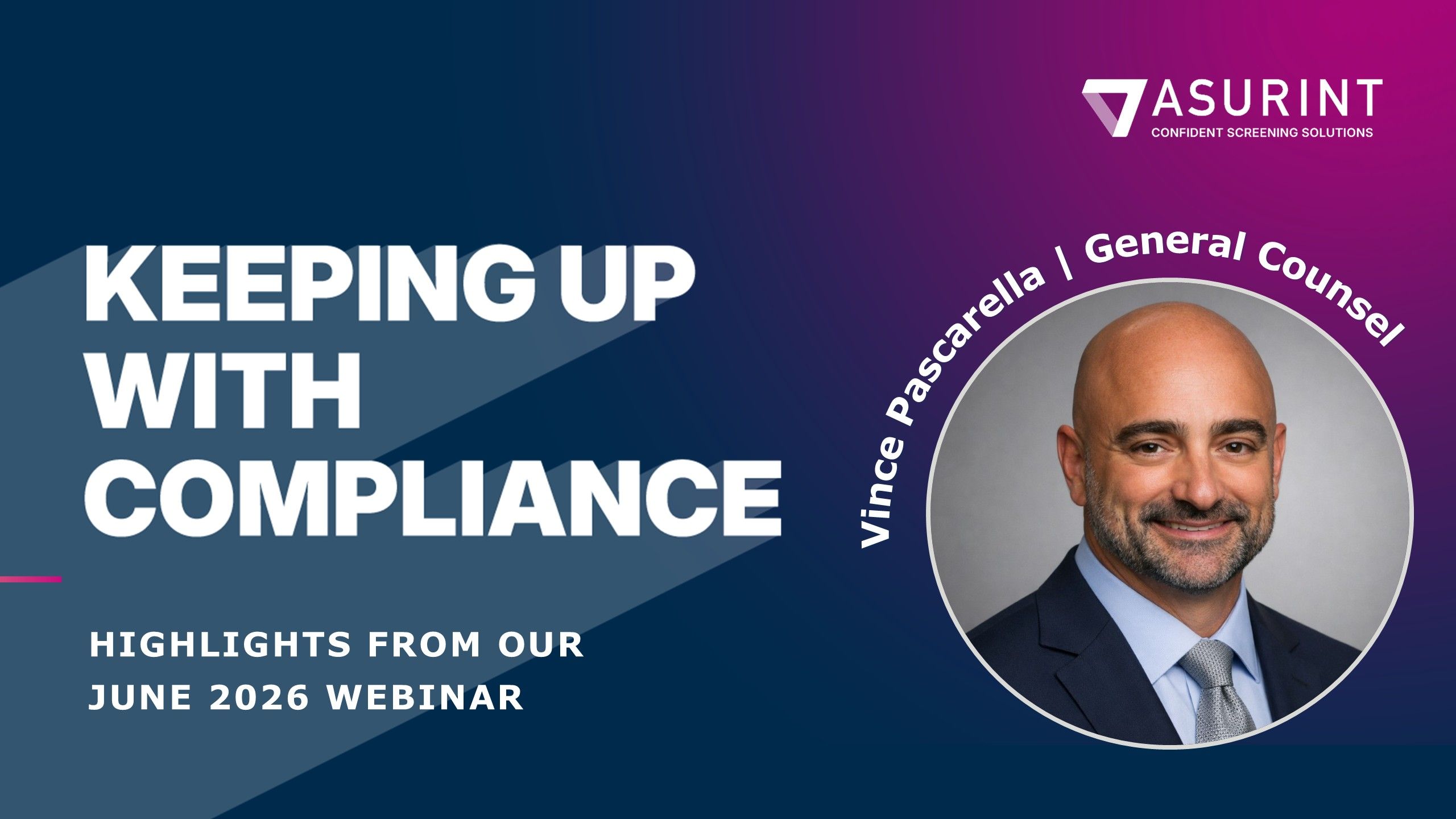
Our General Counsel Vince Pascarella is back with another session of Keeping Up with Compliance, where he broke down the most important developments shaping the hiring landscape today.
Below is a high-level look at three major areas covered. To get a deeper dive as to how these changes may affect your hiring and screening program, we highly recommend watching the full webinar recording.
1. The Expanding Complexity of State-Level Hiring Laws
One of the biggest themes from this quarter’s update is just how active and fast-moving state legislation has become. From marijuana laws to “ban the box” to fair chance hiring requirements, employers are facing a mess of rules that vary significantly by jurisdiction.
Vince highlighted how even seemingly straightforward legislative outcomes can have complex downstream impact. For example, while some state marijuana bills failed to pass, others are driving real change in criminal record handling and sealing, especially in states like Virginia, where automatic sealing backlogs could have significant impact in the near term.
At the same time, states like Washington are raising the bar for fair chance hiring practices. New requirements include:
- Delaying background checks until after a conditional offer
- Requiring individualized assessments
- Providing time for candidate response before final adverse action
“When it comes to fair chance, for national employers, regardless of the location of the applicant or the job, consider waiting until after a conditional offer is made to begin criminal history inquiries and background checks,” said Vince. “Such an approach aligns well with fair chance laws across multiple states and localities and helps create a consistently compliant hiring process nationwide.”
2. Stuck in the Middle with Marijuana Policies
Oh marijuana, the topic that never seems to go away.
Marijuana continues to be one of the most complex, and confusing, areas of compliance for employers. Between shifting state laws and ongoing federal activity, employers are navigating one of the most complex and misunderstood areas of hiring policy today.
At the state level, laws are evolving in different directions. Some bills aimed at expanding employee protections or legalizing use have stalled, while others (particularly those tied to expungement) are actively reshaping how and whether certain criminal history appears in background checks. In states like Virginia, for example, expanded criminal record sealing tied to cannabis related records could significantly impact what employers see during the hiring process, especially as record sealing backlogs are worked through.
Federal agencies, on the other hand, have taken steps toward rescheduling marijuana, including the Department of Justice (DOJ) action and ongoing Drug Enforcement Administration (DEA) hearings that could expand changes beyond medical use.
Even though federal activity around rescheduling marijuana is gaining momentum, it’s also creating plenty of false assumptions about what’s actually changing.
This disconnect between perception and policy is where risk begins to surface for hiring teams. Employees may believe marijuana legalization means workplace acceptance, while employers are still required to enforce state and federal standards and internal policies that say otherwise.
As Vince explained, the situation becomes even more complicated when considering overlapping legal frameworks like the American with Disabilities Act (ADA) and lawful off-duty conduct protections. As marijuana classification evolves, employers may find their existing policies increasingly open to challenge, particularly when state and federal legality conflict.
3. The Legal Uncertainty of Disparate Impact Enforcement
Another major development discussed in the webinar is the shifting stance on disparate impact discrimination, a cornerstone of employment law for decades.
Historically, employers could face liability if a neutral policy (like background screening) disproportionately adversely affected a protected class, even without intent to discriminate. This standard has been embedded in law since the landmark Griggs v. Duke Power decision and later codified into federal statutes, agency rules and guidelines, and state and federal court rulings.
However, recent action from the DOJ has introduced new uncertainty. A directive questioning the constitutionality of disparate impact enforcement could halt federal enforcement activity in this area, at least temporarily.
At first glance, that might sound like relief for employers. But Vince cautioned against that assumption:
- The DOJ position does not override court precedent
- Private plaintiffs can still bring claims
- State agencies are likely to increase enforcement activity
“At the end of the day, we’ve got a lot of legal uncertainty,” said Vince. “There's potential divergence between agency enforcement and the way courts are going to look at individual plaintiffs who bring these types of claims or state level enforcement agencies who step into the gap here and start bringing these cases more actively. So we’ll watch and see.”
We cover more on disparate impact and highlight what’s changing so employers can stay compliant.
Stay Ahead of Compliance Changes
From fair chance laws and clean slate legislation to marijuana reclassification and disparate impact discrimination, 2026 continues to keep employers on their toes when it comes to compliance
This recap only scratches the surface of what was covered in the Keeping Up With Compliance webinar. Vince gives deeper context, practical examples, and expert insights throughout the webinar session that are invaluable for HR, legal, and compliance professionals alike.
Disclaimer: This content is provided for informational and educational purposes only and is not intended to constitute legal advice. It reflects general industry insights and best practices to support discussion and awareness. Organizations should consult with their legal, compliance, or other professional advisors before making changes to their background screening programs to ensure compliance with applicable laws and regulations.
You might also like

5 Golden Rules for Property Operators
The following five principles reflect what effective, modern tenant screening looks like today and how property teams can protect their assets while meeting evolving expectations.

3 Drug Screening Assumptions Employers Need to Revisit
During our recent webinar, "Can You Spot the Lie? The Employer's Drug Testing Reality Check," three themes stood out as particularly important for employers evaluating or updating their drug testing programs.

Social Media Screening: Here's What Employers Need to Know
Social media screening is gaining traction in hiring, but understanding the facts behind the process is key to making informed, compliant decisions.