


How Carriers Can Hire Drivers Faster: Insights on AI, Driver Expectations, and Recruiting Efficiency
7 min read
Published
Nov 23, 2026

Key Takeaways
- Drivers are becoming more selective, making candidate experience more important than ever.
- Recruiters and safety teams are under pressure to hire faster while maintaining compliance and hiring quality.
- AI-powered workflows, such as Tenstreet Assistant, can help reduce manual work, allowing teams to focus on decision-making rather than administration.
Carriers are navigating shifting driver expectations, increasing competition for experienced talent, growing compliance pressures, and an influx of new technologies that promise to streamline hiring. At the same time, recruiting and safety teams are being asked to do more with less while delivering a faster and more seamless experience for drivers.
To unpack what's happening across the industry, Amanda McGregor, Transportation Product Manager at Asurint, sat down with Steve Brown, Chief Revenue Officer at Tenstreet, for an open conversation about transportation hiring trends, AI adoption, recruiting challenges, and what carriers should be focused on heading into the future.
1. Are Carriers Still Struggling With Driver Shortages?
The answer isn't as simple as it was a few years ago.
According to Steve Brown, the industry isn't necessarily dealing with the same hiring environment it experienced during peak driver shortages. Instead, carriers are encountering a different challenge: attracting drivers who may not be actively looking for a new opportunity.
"Drivers seem to be kicking the tires, but not necessarily looking,” said Steve. “They're evaluating opportunities much more carefully than they did in the past, which means carriers have to think about every interaction they have with a candidate."
When drivers aren't urgently searching for a new role, carriers have less room for error. Every touchpoint, from the application process to communication and onboarding, becomes more important because candidates have more choices and less urgency.
2. How Have Driver Expectations Changed?
Today's drivers are acting more like consumers. They're researching carriers, comparing options, reading reviews, and evaluating their experience before deciding where they want to work.
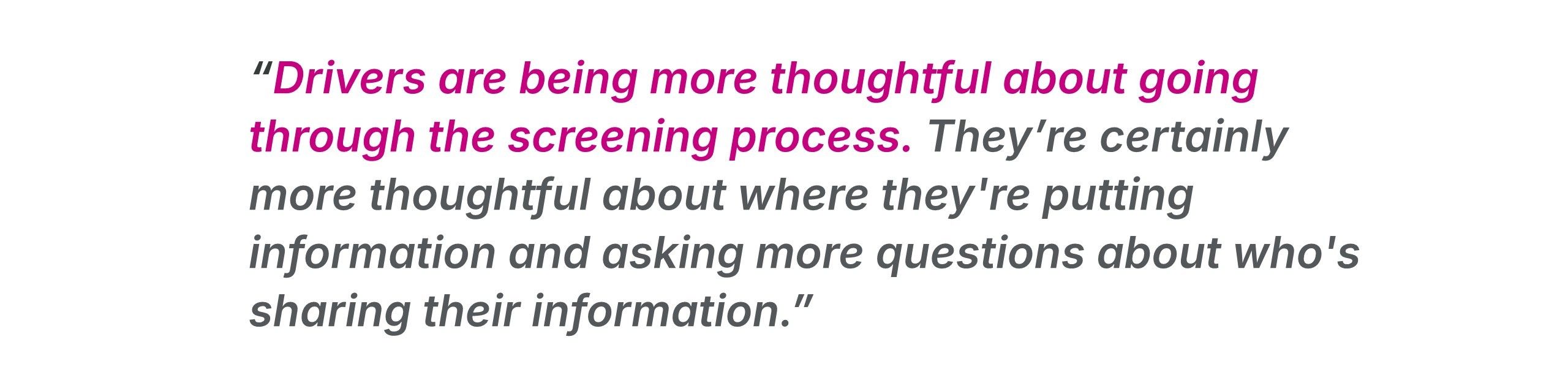
Amanda noted that drivers have become increasingly selective throughout the hiring process, extending beyond pay packages and home-time benefits. Drivers want transparency. They want responsive communication. They're paying closer attention to how their personal information is handled.
Many are also evaluating whether a carrier represents a long-term career opportunity rather than simply their next job.
This creates an opportunity for carriers. Organizations that make hiring easy, transparent, and respectful can differentiate themselves before a driver ever gets behind the wheel.
3. What's Creating the Most Pressure for Recruiting and Safety Teams?
In many organizations, resources continue to stay limited while expectations continue to increase for recruiting and safety teams.
Amanda believes the answer to this challenge goes beyond just adding more technology: “The goal isn't to add technology just because it's available. The goal is to remove unnecessary manual work so recruiters and safety teams can spend more time focusing on people and making informed decisions.”
Many recruiting teams still spend significant amounts of time completing administrative tasks, reviewing documents, comparing records, and manually following up on routine items. Every minute spent on low-value activities is time that could be spent building relationships with candidates.
This is exactly where the Asurint and Tenstreet partnership creates value, helping carriers reduce administrative burden, eliminate friction from the hiring process, and empower recruiting and safety teams to focus on making confident hiring decisions.
4. How Are Asurint and Tenstreet Are Helping Carriers Hire With More Confidence?
Rather than simply connecting systems, Asurint and Tenstreet have shifted their focused on creating smarter workflows that help carriers reduce manual work, improve visibility, and make faster, more informed hiring decisions.
Throughout the conversation, Amanda and Steve emphasized that innovation works best when it's driven by real customer challenges. By listening closely to carriers, both companies have continued to refine their technologies to remove friction from the hiring process while maintaining the speed, accuracy, and compliance recruiters and safety teams depend on.
As Steve explained, "For the driver, it's one seamless experience. For the carrier, it's about making sure the right information is available at the right time, without adding more complexity to the process."
That shared approach has become even more important as AI enters the transportation hiring landscape. Rather than replacing people, both organizations are focused on using technology to automate repetitive tasks, surface meaningful insights, and give hiring teams more time to focus on decision-making.
5. What Is Tenstreet Assistant, And Why Are Carriers Paying Attention?
One of the most exciting parts of the discussion centered on Tenstreet Assistant and its integration with Asurint.
Steve described Tenstreet Assistant as a new approach to AI-powered workflow automation that helps recruiting, safety, and processing teams identify opportunities to save time without removing people from the process.
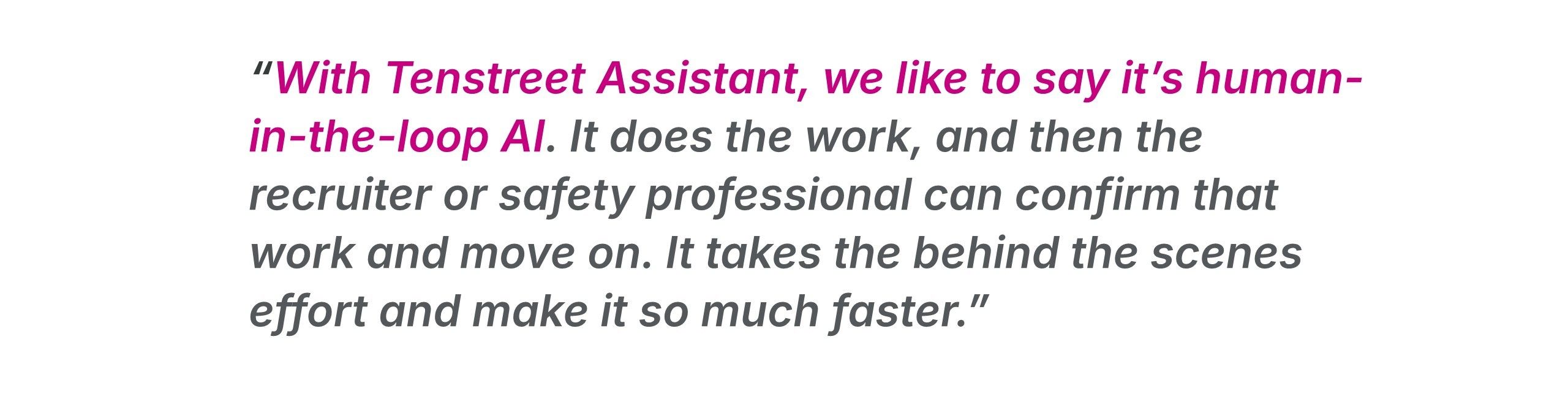
"What we like to say is it's human-in-the-loop AI,” said Steve. “Technology is handling repetitive work, but people remain at the center of the process."
A great example is the ability to automatically compare motor vehicle record data against driver application information and proactively identify discrepancies for review.
Instead of requiring staff to manually work through every detail, the technology can surface potential issues for a human decision-maker. The result is a process that can be both faster and more accurate.
Amanda believes the value extends beyond productivity: "The real value isn't just helping teams move faster. It's helping them focus their time and attention where it's needed most, so they can make informed decisions with confidence while reducing the administrative work happening behind the scenes."
That balance is becoming increasingly important as carriers face pressure to fill seats quickly while maintaining high hiring standards. AI-assisted workflows can help streamline administrative work, improve consistency, and support better hiring outcomes across the process.
Putting Drivers, Carriers, and Clients First
As Amanda McGregor and Steve Brown discussed throughout the conversation, the carriers that succeed won't be the ones chasing every new technology trend. They'll be the ones that use technology strategically to remove friction, empower people, and create a better experience from application to hire.
Carriers should focus on three key areas:
- Eliminating unnecessary complexity in the hiring process. Every duplicate data entry, manual review, or disconnected workflow creates friction for both drivers and hiring teams. The easier it is for information to move through the process, the easier it becomes to attract and engage qualified candidates.
- Creating a hiring experience that reflects today's driver expectations. Drivers are evaluating carriers more carefully than ever before. Fast communication, transparency, and a smooth application-to-onboarding experience can be just as influential as compensation when candidates are weighing opportunities.
- Using technology to empower people, not replace them. The most effective use of AI isn't making hiring decisions. It's helping recruiters, processors, and safety teams spend less time on administrative tasks and more time evaluating candidates, identifying risks, and making informed decisions.
As Steve put it: "In the end, it's about the driver and the carrier and the customer."
Everything else, from AI-powered workflows to smarter integrations and screening innovations, is simply a means to that end. Because when drivers, carriers, and customers succeed, the entire industry moves forward.

Disclaimer: This content is provided for informational and educational purposes only and is not intended to constitute legal advice. It reflects general industry insights and best practices to support discussion and awareness. Organizations should consult with their legal, compliance, or other professional advisors before making changes to their background screening programs to ensure compliance with applicable laws and regulations.
You might also like

EEOC Compliance Update: Arrest and Conviction Records Guidance Rescinded
The EEOC's decision to rescind its 2012 criminal records guidance marks a notable policy shift, but employers still need to understand what has changed and what compliance obligations remain.

5 Drug Screening Questions HR Leaders Should Revisit
If you want to build an effective drug and health screening program, start by asking these five questions.

Keeping Up with Compliance: Recent FCRA Litigation Trends Employers Need to Watch
We cover recent FCRA cases shaping the employment background screening landscape and highlight emerging legal trends employers should have on their radar.