


Keeping Up with Compliance: Recent FCRA Litigation Trends Employers Need to Watch
5 min read
Published
Oct 19, 2026
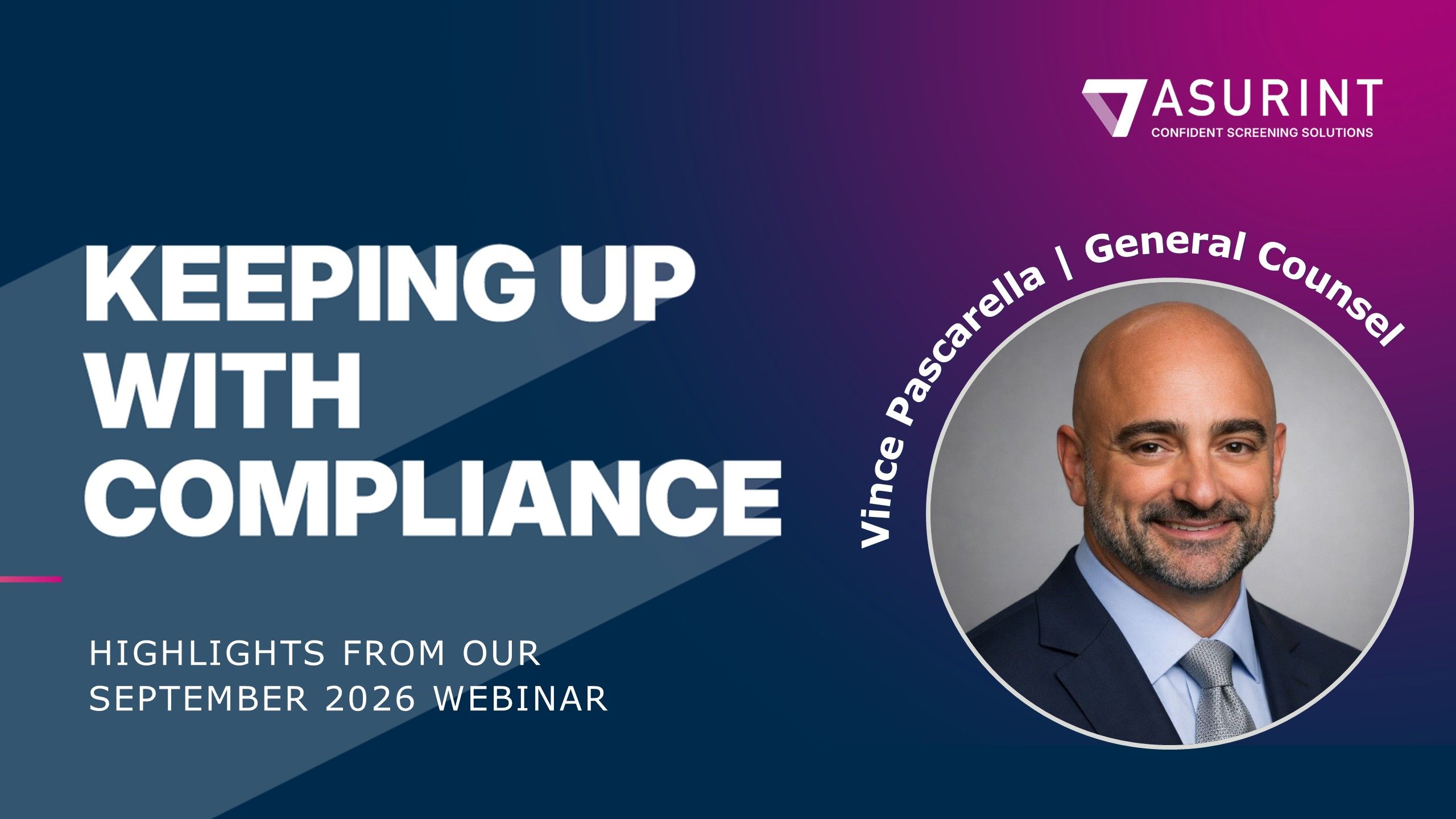
Background screening compliance continues to be one of the most active areas of employment law, and recent Fair Credit Reporting Act (FCRA) litigation proves just how costly even technical missteps can become.
During our latest Keeping Up with Compliance webinar, Vince Pascarella, Asurint’s General Counsel, reviewed several recent FCRA cases shaping the employment background screening landscape and highlighted emerging legal trends employers should have on their radar.
Below is a high-level look at some of the key developments discussed during the webinar. For a deeper dive into the cases, legal analysis, and practical compliance considerations, you can watch the full webinar recording.
Why These FCRA Cases Matter
For employers that conduct employment background checks, the Fair Credit Reporting Act (FCRA) serves as the foundation for compliance. The law governs how consumer reports can be obtained and used for employment purposes and outlines requirements related to disclosures, authorizations, adverse action, and individual rights.
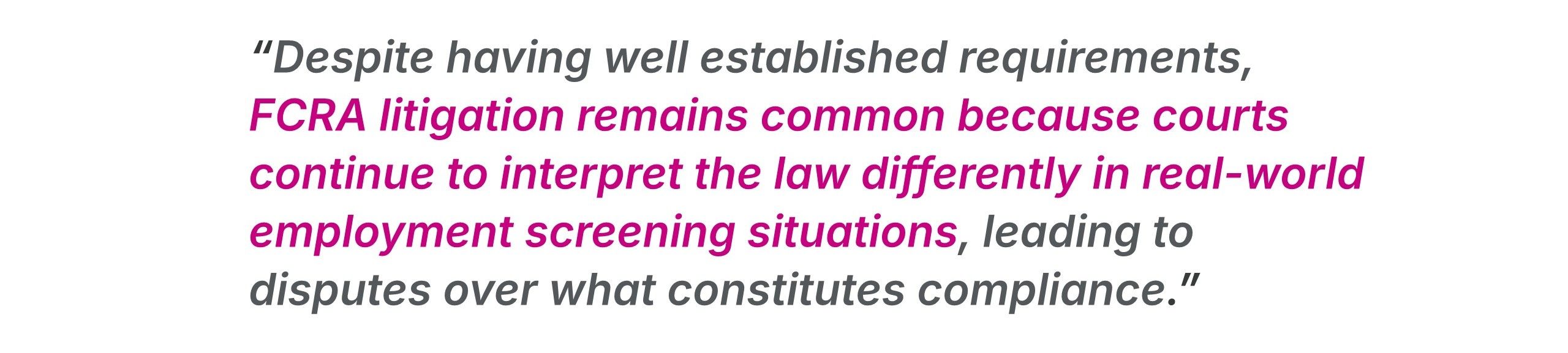
Although these requirements are well established, FCRA litigation remains active because courts continue to interpret how the law applies in real-world situations. As a result, seemingly routine background screening processes can become the subject of lawsuits when employers, courts, and plaintiffs view compliance obligations differently.
For employers, this serves as an important reminder that even well-established compliance obligations require regular review. Policies, forms, and hiring workflows that were compliant years ago can create risk if they have not been evaluated against current legal interpretations and litigation trends.
Background Screening Compliance Doesn't End After Hiring
One of the first cases Vince covered was Rose v. Homer Plessy Community School, a lawsuit that serves as a reminder that background screening compliance doesn't stop once a candidate becomes an employee. The case raised questions around how background check information was obtained and used after employment had already begun, bringing attention to several FCRA compliance requirements that employers may not always associate with existing employees.
"These are probably the most common types of FCRA claims brought against employers related to the adverse action process, authorizations, and disclosures,” noted Vince.
A key theme from the discussion was that the FCRA's requirements can extend beyond the initial hiring decision. Background checks may be used for a variety of employment-related purposes, including retention decisions, promotions, transfers, and other workforce management activities. Or to summarize: Employment purposes isn't pre-hire only.
While the Rose case focused on foundational FCRA requirements, another topic discussed during the webinar highlighted how compliance obligations can vary depending on where an employer operates. For organizations with a multistate workforce, keeping pace with differing court interpretations can be just as important as understanding federal requirements.
California Courts Aren't Seeing Eye-to-Eye on FCRA Claims
It wouldn't be a compliance webinar without a California update.
One of the more interesting discussions centered on two California appellate decisions, Limon v. Circle K Stores and Askins v. CRST Expedited, which reached different conclusions on an important question: Does a plaintiff need to show actual harm to pursue certain FCRA claims?
- Limon v. Circle K Stores: The court said plaintiffs must demonstrate they were actually harmed by the alleged violation
- Askins v. CRST Expedited: The court allowed claims to move forward even without that showing.
As a result, California employers are left navigating two different interpretations of similar FCRA issues.
Vince commented on the impact of these interpretations: "We now have inconsistency across California, and that will continue until and unless the California Supreme Court takes this matter up."
For employers with operations in California, or those hiring California-based applicants, this is a development worth monitoring closely. Until there is greater clarity from the courts, organizations should continue to review their background screening and adverse action processes to ensure they align with current FCRA requirements and evolving legal interpretations.
Why Employers Should Pay Attention to Cases Even When They Don't Reach Trial
The webinar also revisited several cases discussed earlier this year, many of which have since been resolved. While employers often look to court decisions for guidance, the reality is that many FCRA cases never make it all the way to trial.
As Vince explained, litigation can be expensive and time-consuming, leading organizations to weigh legal costs, potential exposure, and other business considerations when determining how to move forward. As a result, settlements are common, even in cases involving disputed legal issues.
For employers, the biggest takeaway isn't necessarily how the case ends. It's understanding what sparked the lawsuit in the first place. Whether the issue involves disclosures, authorizations, or adverse action procedures, these cases can help organizations spot potential compliance gaps and make improvements before they become bigger problems.
Watch the Full Webinar Recording
Employment background screening laws continue to evolve, and recent litigation demonstrates how quickly compliance risks can emerge.
From adverse action procedures and background check disclosures to developing class action theories and California litigation trends, this quarter's Keeping Up with Compliance webinar covered important developments that HR, legal, compliance, and talent acquisition leaders should understand.
This recap only scratches the surface.

Disclaimer: This content is provided for informational and educational purposes only and is not intended to constitute legal advice. It reflects general industry insights and best practices to support discussion and awareness. Organizations should consult with their legal, compliance, or other professional advisors before making changes to their background screening programs to ensure compliance with applicable laws and regulations.
You might also like

5 Golden Rules for Property Operators
The following five principles reflect what effective, modern tenant screening looks like today and how property teams can protect their assets while meeting evolving expectations.

3 Drug Screening Assumptions Employers Need to Revisit
During our recent webinar, "Can You Spot the Lie? The Employer's Drug Testing Reality Check," three themes stood out as particularly important for employers evaluating or updating their drug testing programs.

Social Media Screening: Here's What Employers Need to Know
Social media screening is gaining traction in hiring, but understanding the facts behind the process is key to making informed, compliant decisions.