

Rebuilding the Manufacturing Workforce: Skills, Safety, and Staffing Realities
7 min read
Published
Mar 24, 2026
If you’re hiring in manufacturing right now, you’re probably feeling the tension. Job openings aren’t spiking, but they’re not filling as quickly either. Automation keeps growing, but the talent capable of supporting that technology hasn’t caught up.
And retention? That’s become its own challenge. With manufacturing employment hovering near 12.7 million at the end of 2025 and vacancy rates staying stubborn at about 4.2%, teams are stretched thin.
It’s why manufacturers are evaluating every stage of the hiring process, including how a reliable background screening program can support safety and long-term fit. Here’s a closer look at the trends reshaping the workforce this year and what hiring teams need to know to keep production running smoothly.
Automation and AI Are Advancing Faster Than Workforce Skills
Automation and AI continue to reshape manufacturing, but not in the way many expected. Instead of reducing labor pressure, automation and AI are changing what work looks like for frontline workers.
Today’s frontline roles look very different than they did even five years ago:
- Machine operators now interact with a Manufacturing Execution System (MES) or a Warehouse Management System (WMS) and digital dashboards
- Maintenance techs must navigate sensor-driven diagnostics and automated alerts
- Supervisors manage both people and increasingly complex data flows
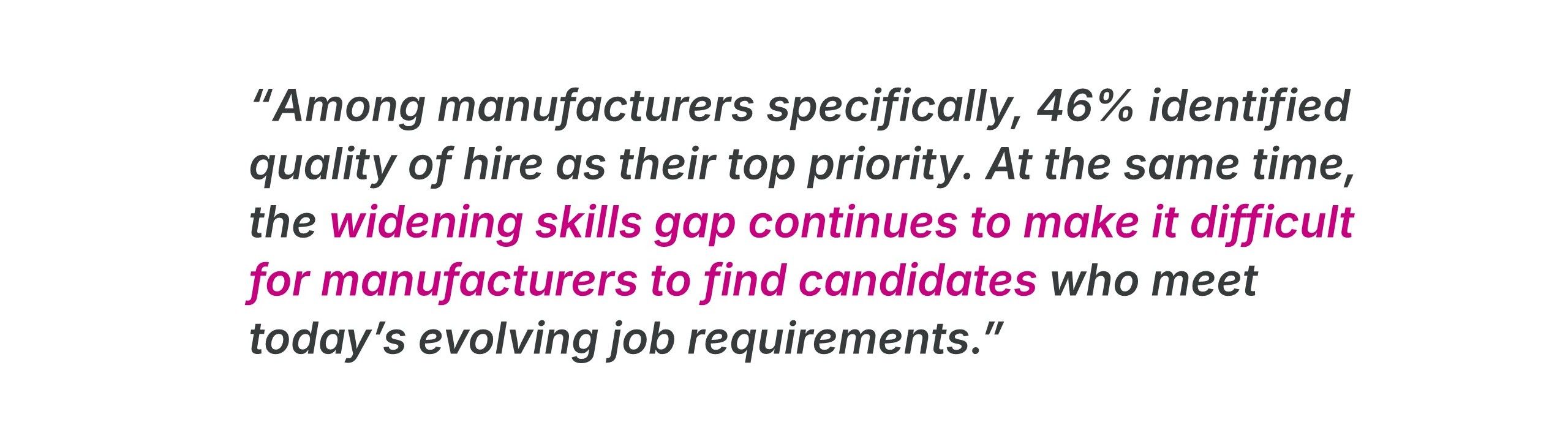
In our Inside 2026: Hiring, Compliance, and Background Screening Trends Shaping the Year Ahead webinar, we shared that more than 200 HR professionals ranked quality of hire as the most important hiring metric for 2026. Among manufacturers specifically, 46% identified quality of hire as their top priority. At the same time, the widening skills gap continues to make it difficult for manufacturers to find candidates who meet today’s evolving job requirements.
Deloitte reports more than a third of manufacturing executives say their top workforce concern is equipping employees with the skills needed to operate in increasingly digital environments.
Candidates are now expected to have strong digital literacy and the ability to adapt quickly to new technologies. As automation and smart systems advance, the definition of a “qualified” worker is changing. Traditional mechanical know-how is not enough, as manufacturing jobs are now requiring a blend of technical, analytical, and digital capabilities.
Temporary Workers and Contractors Are Becoming a Core Workforce Strategy
The hiring of contractors is beginning to shift from a short-term fix to a long-term strategic, flexible workforce model for both operational flexibility and quickly filling the skill gaps, especially as the industry becomes more technology-driven. Despite factories cutting 12,000 jobs earlier in 2026, demand remains strong for skilled roles like technicians and engineers, driving a larger need for hiring contractors.
What are the benefits for manufacturers?
- Cost Management: Helps reduce labor spend by eliminating expenses tied to benefits, paid leave, and long-term commitments, giving manufacturers more room to operate in tight-margin environments.
- Scalability: Enables plants to quickly adjust staffing for seasonal spikes, new product launches, or unexpected surges in demand without taking on permanent headcount.
- Talent Evaluation: Allows a low risk “try-before-you-hire” period, allowing them to assess technical proficiency, safety practices, and cultural fit before extending fulltime offers.
- Skills Gap Relief: Provides rapid access to specialized expertise for technical projects, automation upgrades, or niche production needs when existing teams don’t have the required competencies.
As a result, background screening becomes even more important. Temporary workers still operate in safety-sensitive environments and having an inconsistent background screening process between contractors, temporary workers, and full-time employees can increase compliance and safety risk.
Manufacturers should approach background screening by job roles to ensure contractors and temporary workers are qualified and ready to contribute, without slowing down the fast-hiring cycles that make flexible staffing so valuable.
Expanding the Talent Pool Through Fair Chance Hiring
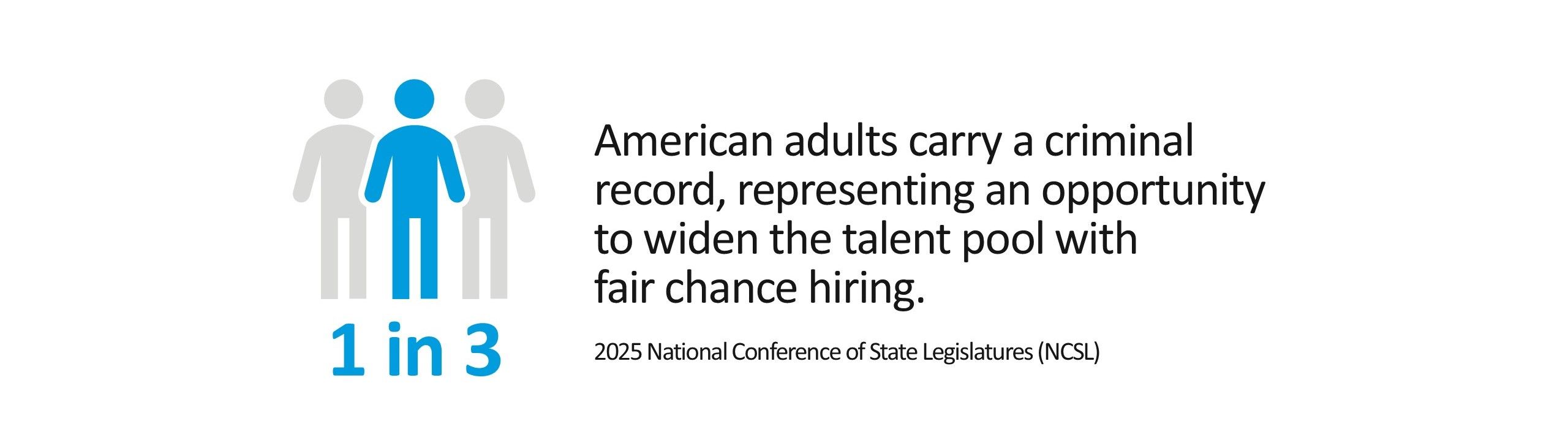
One trend gaining momentum in the manufacturing industry is fair chance hiring: bringing in candidates with prior criminal records. With nearly 80 million Americans carrying a criminal record (almost one in three adults), this approach represents a significant opportunity to widen the talent pool at a time when labor shortages remain a critical challenge.
Manufacturers who embraced it early, like Eaton, which hired more than 1,000 second-chance workers in 2024, have reported strong performance, high retention, and reliable safety outcomes.
This approach may not be right for every position being filled, but for those considering adopting a fair chance program, here are some questions that should be asked:
- Are our current hiring policies truly designed to protect safety, or are they unintentionally acting as blanket exclusion policies?
- How do our policies align with our stated values around diversity, inclusion, and social responsibility?
- What risks are we trying to mitigate, and are there more effective ways to manage those risks without unnecessarily eliminating otherwise qualified candidates?
- How can we ensure fairness while maintaining compliance and safety standards?
Post-accident Drug Positivity is On the Rise
Single, preemployment testing is no longer enough to protect today’s production environments. Quest Diagnostic analysis shows that post-accident marijuana positivity has increased 204% over the past 10 years, rising steadily every year from 2012-2022. These increases align with broader marijuana legalization and indicate not just more use, but higher overall workforce use.
For manufacturing, where reaction time, coordination, and equipment awareness are critical, this trend raises alarms. In a landscape where legalization continues to evolve, manufacturers need to move beyond drug testing only at the time of hire.
Manufacturers are now reassessing their testing strategies, such as implementing random drug testing for their workers. This offers real-time insight into safety risks and reinforcing a culture of accountability on the floor.
Reshoring Pressures Are Creating New Staffing Challenges
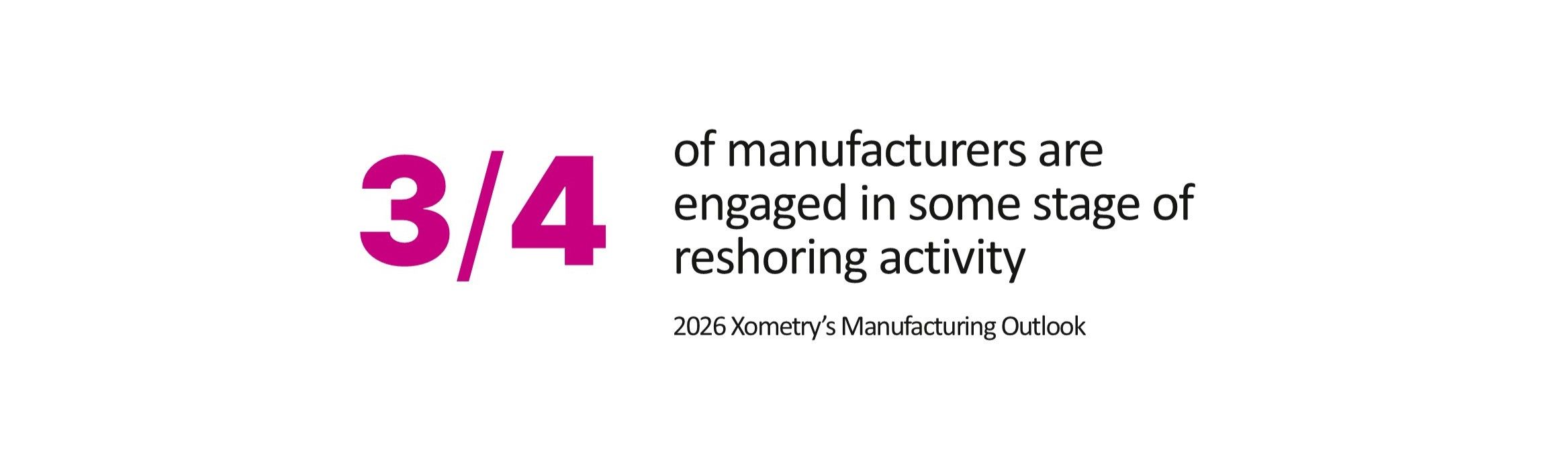
Tariffs and ongoing supply chain shifts have many manufacturers rethinking where their operations should live. Roughly three-quarters of surveyed manufacturers are engaged in some stage of reshoring activity, whether having completed reshoring operations or actively pursuing reshoring plans. But while the momentum is there, the workforce needed to support it isn’t keeping up.
Even with new investments and factory projects on the rise, labor shortages and skill gaps are slowing the transition. Manufacturers consistently report that staffing challenges are one of the biggest barriers to opening or scaling U.S. facilities, and many are seeing time‑to‑production slip because they can’t find the skilled trades and technical talent they need.
All of this is forcing leaders to take a fresh look at their workforce strategies. They’re balancing automation investments with talent pipelines, rethinking hiring timelines, and working to ensure that any new or expanded production capacity can actually be supported by the people required to run it.
Where Background Screening Fits Into Today’s Manufacturing Challenges
These shifts heighten the importance of having a strong, thorough background screening program. As new facilities open and employers scale quickly, background screening designed for manufacturing plays a vital role in workforce safety, maintaining compliance, and confirming that candidates have the qualifications required for advanced manufacturing roles.
A strong background screening program supports:
- Workplace safety by helping ensure employees are prepared to work around machinery, automation, and safety-sensitive operations.
- Verification of technical skills and certifications, especially for roles involving maintenance, controls, or specialized equipment.
- Consistent compliance across jurisdictions, which is increasingly important as manufacturers expand or open new facilities.
- Predictable hiring timelines, helping operations plan staffing needs without unnecessary delays.
- An employer’s reputation for reliability, which supports retention and helps attract workers seeking stable, safety-first employers.
The combination of automation-heavy processes, safety-critical environments, and persistent labor shortages means background screening must operate with speed, accuracy, and consistency. When screening is aligned with the broader hiring process, rather than slowing it down, manufacturers are better equipped to build a stable, trusted workforce that keeps production moving safely and efficiently.
Strengthening the Workforce Behind the Production Line
Technology is accelerating faster than workforce skills. Reshoring is expanding faster than labor pools. And production demands are shifting faster than hiring systems can respond. Yet manufacturers are being asked to do something incredibly difficult: keep plants running safely and efficiently while navigating a workforce landscape that is more complex, more fragmented, and more competitive than ever.
A strong background screening program, realistic skill expectations, thoughtful onboarding, and flexible staffing models all play a critical role in building a safe and stable workforce. The challenges are real, but with the right systems in place, manufacturers can create teams ready for today’s demands and positioned for the future.
Learn more about Asurint’s background screening solutions for manufacturing.
You might also like

The Cost of Cutting Corners: 6 Reasons Why Quality Tenant Screening Matters
Here are six ways that cutting corners in the screening process can lead to both direct financial losses and hidden long-term impacts.
2026 Hiring, Screening, & Compliance Trends: Key Insights from Industry Experts
Uncover 2026 insights from fair chance legislation to emerging AI regulations to the tools employers are prioritizing this year.

Legislative Sessions Heating Up: Fair Chance Laws Remain Focus
State legislatures have been actively addressing a range of key issues, with fair chance laws emerging as a particularly popular focus.