

The Cost of Cutting Corners: 6 Reasons Why Quality Tenant Screening Matters
7 min read
Published
Mar 06, 2026

In multifamily operations, occupancy and net operating income (NOI) drive performance, but rushing to fill a vacancy without proper due diligence can backfire. A critical part of that diligence is conducting quality tenant screening on every applicant. It takes only one poorly vetted tenant to erode profitability, increase operational strain, and damage community reputation.
The reality? One bad placement can cost thousands, often far more than most operators estimate. Avoiding costly mistakes starts with understanding where the financial risk truly lies, and how to prevent it.
A quality tenant screening program empowers property managers to make confident decisions, minimize financial exposure, and foster a positive tenant experience.
Below are six ways that cutting corners in the screening process can lead to both direct financial losses and hidden long-term impacts.
Direct Costs Impacting Your Bottom Line
Four key factors linked to placing a bad tenant can directly impact your bottom line, resulting in immediate financial losses and added expenses. These can be often tracked through a property management system (PMS) or even a simple spreadsheet.
Delinquent or Unpaid Rent
Missed or late rent disrupts cash flow and often forces owners to cover mortgage payments and operating expenses out of pocket. Issues such as non-payment, lease violations, or the start of the eviction process typically slow or stop the rent stream weeks before a resident is formally removed, resulting in immediate revenue loss and impacting your NOI.
Chronic delinquency also increases collections activity, write-offs, and bad debt. All of this reduces margins and pulls time and focus away from the leasing and resident experience.
Unit Turnover and Repairs due to Property Damage
Delinquent tenants often leave behind more than unpaid rent. Damage can exceed the security deposit and range from minor fixes to major remediation. Abandoned furniture, personal belongings, and damage beyond normal wear and tear can all drive up make-ready costs, delay unit availability, and strain operating budgets with unplanned expenses.
Beyond the physical repairs, operators must also account for the rental revenue lost while the unit is offline during make-ready and turnover work. What does that entail?
- Turnover Time: According to The Complete Make-Ready Guide for Property Managers, a standard turnover typically takes 15-20 days, but can last longer when repairs, inspections, contractor availability, or deferred maintenance come into play. Every additional offline day adds lost rent on top of repair costs.
- Compounding Effects of Turnover and Repairs: Every day a unit sits offline results in lost rent on top of repair expenses. With annual turnover rates of 45-55% and average make-ready costs of $3,000-$5,000 per unit, the financial pressures can quickly escalate into wider challenges that demand attention at both regional and executive levels.
Legal and Eviction Fees
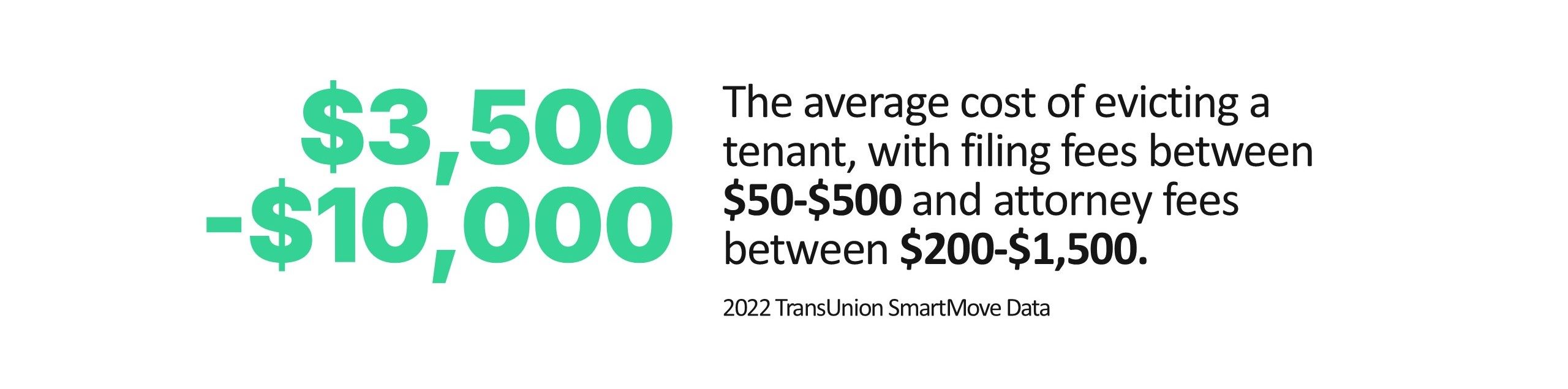
The eviction process is both costly and time-consuming. Costs often involve attorney fees, court costs, filings, and fees for serving paperwork or enforcing judgments. When a resolution can’t be reached, these expenses can quickly escalate into several thousand dollars:
- Total Eviction Costs: TransUnion estimates the average eviction ranges from $3,500 to $10,000
- Filing Fees: Usually between $50 to $500
- Attorney Fees: Around $200 to $1,500+ as reported by Compliance Prime.
- Total Fees: $3,750-$12,000
Beyond the financial impact, the process is often lengthy and complex, requiring formal filings, attorney involvement, and in some cases constable assistance. This can extend the timeline to weeks or even months, adding operational strain and prolonging rent loss.
Evictions also carry significant compliance risks. Missteps in Fair Housing requirements or state-specific eviction laws can lead to penalties, litigation, and reputation harm, compounding the operational stress for property managers already navigating a difficult situation.
Prolonged Vacancies
Prolonged vacancy is one of the most financially damaging outcomes of placing a bad tenant. Every day a unit sits vacant after an eviction represents lost revenue, which is often the largest contributor to overall turnover costs.
Here are several key cost drivers of prolonged vacancy:
- Lost Rental Income: Lost rental income is the single largest expense when a unit is vacated, based on a nationwide survey of multifamily property managers.
- Ongoing FixedExpenses: While a unit is offline, owners still have to carry out unavoidable expenses, including taxes, insurance, and utilities, further compounding the revenue loss.
- Advertising & Concessions: Attracting new residents often requires marketing spend, leasing incentives, or concessions, increasing total costs.
Indirect, Long-Term Costs
While the direct costs of placing a bad tenant are relatively easy to track and quantify, the indirect or “hidden” costs are just as important and often overlooked. These harder to measure impacts can quietly erode profitability and create long-lasting strain on a landlord’s operations, reputation, and overall well-being.
Emotional Stress and Time Investment
Managing non-payment, disruptive behavior, and legal issues is time-consuming and emotionally draining. Up to 80% of property management teams’ time is devoted to maintenance, rent collection, and inspections. These tasks pull leasing teams away from their primary focus: driving occupancy and delivering a great resident experience. When problem tenants demand more attention, teams spend less time leasing, staff become overstretched, and overall portfolio performance declines.
Long Term Impact and Damage to Reputation
One bad tenant can influence far more than the unit they occupy. Noise, disturbances, and unresolved issues often carry over to other neighbors, leading to complaints and negative online reviews that can harm a property’s reputation and reduce leasing traffic. According to Reputation’s 2024 Property Management Report, 71% of renters avoid touring a property after seeing negative reviews, showing how a single disruptive resident can damage your reputation and reduce leasing success.

Why Quality Tenant Screening Drives Property Management Success
One of the most effective ways to reduce risk, protect NOI, and strengthen community operations is to implement a thorough tenant screening program. The upfront cost is minimal compared to the downstream financial, operational, and reputational impact of placing the wrong resident. A reliable screening program should be thorough and compliant, giving property management teams the confidence to make informed, confident decisions.
A comprehensive tenant screening program should include:
- Criminal History: Identifies potential safety risks while ensuring adherence to Fair Housing and FCRA guidelines.
- Credit and Financial Checks: Reveals financial responsibility and verifies an applicant’s ability to meet rent obligations, reducing the likelihood of future delinquency.
- Housing Records: Highlights past rental behavior, including evictions, broken leases, payment issues, and conflicts with previous landlords. These patterns can signal future challenges. To support this broader effort, many operators also leverage third-party tools integrated with their PMS to help authenticate an applicant’s identity and verify submitted documents. While these tools operate independently of tenant screening providers, they complement the overall workflow by helping teams validate information earlier in the leasing process.
Why the Right Tenant Screening Partner Matters
Partnering with an quality tenant screening provider is a great way to safeguard your properties, maintain compliance, and protect your bottom line. A strong partner brings transparency, flexibility, and rigor that extends far beyond a basic background check and strengthens community operations.
What sets a high-quality tenant screening provider apart from others? Look for a provider that offers:
- Full coverage, multi-jurisdictional data that reduces blind spots and uncovers records missed by limited databases.
- Educational resources that help property managers stay informed about Fair-Housing considerations and establish their own internal screening criteria.
- Customizable screening packages designed to expand coverage, reduce turnaround time, and deliver fast, accurate, and compliant information.

Strengthening Your Portfolio, One Resident at a Time
Protecting your assets, your community, and your reputation should always be a top priority, but the path to doing that begins long before a resident ever moves in. In multifamily operations and property management, every leasing decision matters. Each applicant approved has a direct impact on your property’s brand, the resident experience, and ultimately, your NOI. One bad tenant can ripple through maintenance, leasing, legal, and operations in ways that slow performance and strain your staff.
But these risks are preventable. A high-quality tenant screening program can enable property managers to make confident decisions. They should empower your team, reduce uncertainty, eliminate blind spots, and ensure consistency across every location in your portfolio. The right partner can help prevent problems before they start and position your properties for long-term growth and stability.
Learn more about Asurint’s tenant screening services here.
Did you enjoy this read? Check out this blog.

You might also like

Rebuilding the Manufacturing Workforce: Skills, Safety, and Staffing Realities
Take a closer look at the trends reshaping the manufacturing workforce this year and what hiring teams need to know to keep production running smoothly.

2026 Hiring, Screening, & Compliance Trends: Key Insights from Industry Experts
Uncover 2026 insights from fair chance legislation to emerging AI regulations to the tools employers are prioritizing this year.

Legislative Sessions Heating Up: Fair Chance Laws Remain Focus
State legislatures have been actively addressing a range of key issues, with fair chance laws emerging as a particularly popular focus.