

2026 Hiring, Screening, & Compliance Trends: Key Insights from Industry Experts
4 min read
Published
Mar 04, 2026
HR teams are continuing to face new pressures around compliance, talent quality, and using new technology responsibly. To help hiring teams prepare for these challenges, Asurint held a live session to unpack the biggest trends shaping hiring and background screening in 2026.
From fair chance legislation to emerging AI regulations to the tools employers are prioritizing this year, there was a lot to uncover. If you missed the session, below are key insights that were shared.
For deeper insights, you can check out the full on‑demand recording.
Key Takeaway #1: 2026 Will Be a Year of Higher Hiring Volume and Higher Standards
A survey conducted by Asurint from 220 HR leaders revealed that most organizations (65%) expect hiring to increase in the coming year. But that growth isn’t consistent across industries, as each sector is experiencing its own set of pressures and shifts:

Do we have a clear employee handbook that outlines unacceptable behaviors (e.g., harassment, threats, illegal drug use)?
- Retail, Hospitality, and Healthcare are anticipating the biggest hiring surges, driven by ongoing demand and high turnover.
- Manufacturing and Transportation continue to battle persistent skills shortages, keeping hiring needs high.
- Tech, however, is uneven. While some segments are expanding, others are experiencing slowdowns or pullbacks.
This creates two realities for HR teams:
- They must do more with less: Lean recruiting teams are being asked to handle greater volume, making efficient workflows essential.
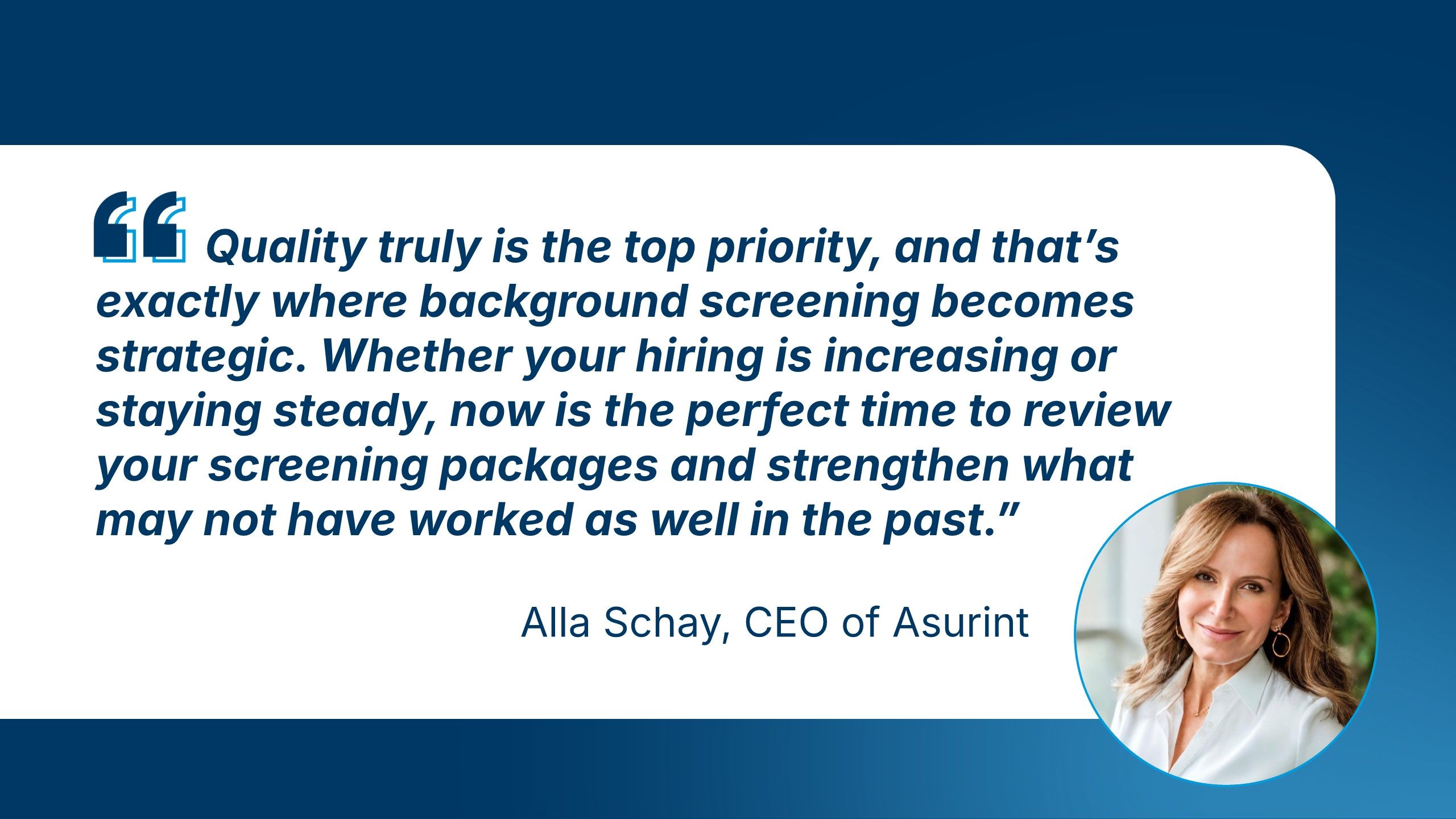
- Quality is becoming the top hiring metric: Quality officially outranked speed and candidate experience among survey respondents.
As hiring accelerates, employers must tighten:
- Screening criteria
- Role specific risk assessment
- Candidate experience touch points
- Governance and documentation around hiring decisions
- Technology use (including AI)
Key Takeaway #2: Compliance Is Evolving Quickly, Especially Around AI and Fair Chance Laws
General Counsel Kelly Uebel highlighted what many HR leaders already feel: keeping up with compliance is still a serious challenge, and the legislative pace isn’t slowing down. 2026 will bring faster, more complex compliance shifts than previous years, and Asurint’s survey shows that nearly 1/3 of HR professionals are already struggling to keep up.
What key changes should employers prepare for?
Expanding Fair Chance Legislation
More states and municipalities are regulating when and how employers can consider criminal history. Many are requiring:
- Individualized assessments
- Specific adverse action procedures
- Delayed criminal history screening
- Candidate engagement and documentation
This patchwork network of complex legislation makes compliance teams’ jobs harder and increases the need for clear processes.
Watch the full webinar to hear the recommended action steps and expert guidance to stay ahead of these fair chance laws.
Growing Regulation of AI in Hiring
AI is now part of nearly every hiring workflow, from resume screening to chatbot interactions. Legislators and regulators are responding with:
- Bias audit requirements
- Transparency mandates
- Restrictions on automated decision-making
- New notice and consent obligations
Understanding how every tool in your ecosystem uses AI, whether built internally or sourced from a vendor, is essential. The regulatory landscape suggests that employers who can demonstrate thoughtful oversight and documentation will be best positioned to stay compliant.
Key Takeaway #3: Employers Are Prioritizing New Screening Tools in 2026
Director of Product Management, Rachel Scagnetti, covered the practical side of how employers are upgrading their hiring workflows based on survey responses.
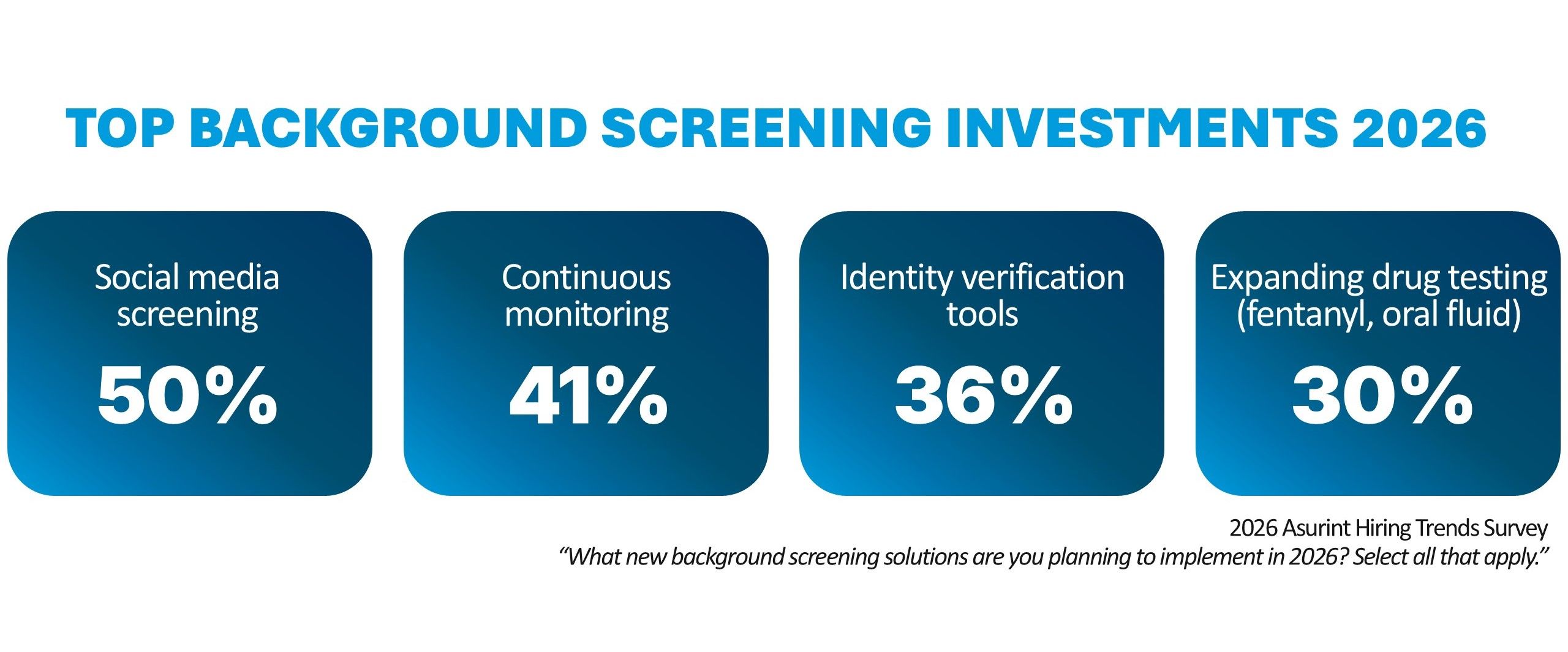
Here’s what organizations are looking to implement this year:
- Social Media Screening (50%): Employers are increasingly reviewing public online behavior to spot potential cultural or reputational risks. It’s becoming a fast-growing tool for assessing professionalism and safeguarding workplace culture.
- Continuous Monitoring (41%): Instead of relying solely on pre-hire checks, organizations are adopting ongoing monitoring, including MVR monitoring and healthcare license monitoring, to monitor changes or risks in real time, supporting safer, more compliant workplaces.
- Identity Verification (36%): With fraud and synthetic identities on the rise, early identity checks are now essential. Verifying candidates upfront helps prevent costly hiring mistakes and strengthens overall security.
- Expanded Drug Testing (30%): Especially in transportation, healthcare, and roles with safety or compliance obligations, drug testing programs are evolving as employers add oral fluid testing and expand panels to detect emerging substances like fentanyl.
Rachel also explored enhancements to foundational screens like alias searches and adjudication assistance tools, including Asurint’s IQ Assist™, all aimed at helping HR teams work smarter and faster.
Watch the Full On‑Demand Webinar
These three takeaways offer a strategic overview, but the webinar goes much deeper. You’ll gain:
- Detailed legislative and regulatory breakdowns
- Practical steps for reducing screening friction
- Best practices for responsible AI use
- Real data from HR leaders across industries
- Emerging trends in background screening technology
Access the full on‑demand webinar to get all insights and share them with your team.
You might also like

Rebuilding the Manufacturing Workforce: Skills, Safety, and Staffing Realities
Take a closer look at the trends reshaping the manufacturing workforce this year and what hiring teams need to know to keep production running smoothly.

The Cost of Cutting Corners: 6 Reasons Why Quality Tenant Screening Matters
Here are six ways that cutting corners in the screening process can lead to both direct financial losses and hidden long-term impacts.

Legislative Sessions Heating Up: Fair Chance Laws Remain Focus
State legislatures have been actively addressing a range of key issues, with fair chance laws emerging as a particularly popular focus.